A Mudroom Reset for the First Wet Weeks of Autumn
A mudroom reset for the first wet weeks of autumn helps damp coats, muddy shoes, and daily bags land in sensible places without a renovation.
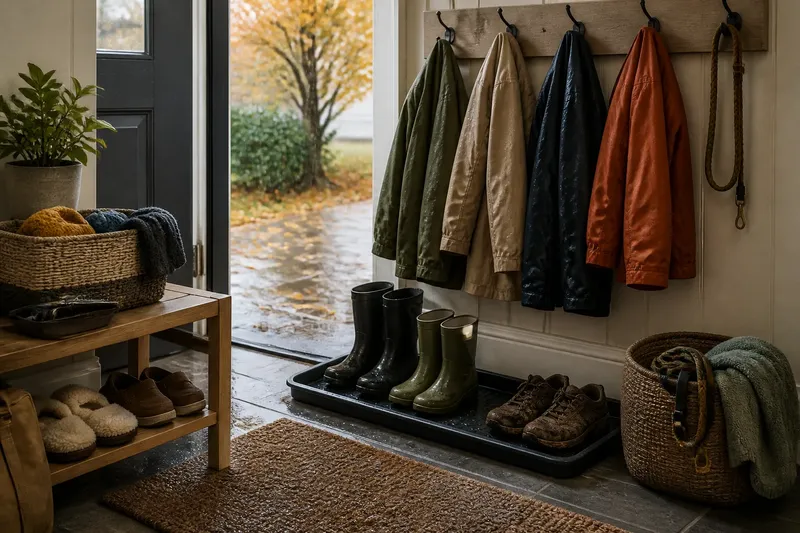
The first rainy school morning of autumn can turn an entryway into a jumble of dripping sleeves, muddy shoes, and bags set wherever there is room. A mudroom reset for the first wet weeks of autumn is less about adding storage than giving each arrival a sensible place to pause, shed wet layers, and move on.
Use what you already have: a few hooks, a washable mat, a basket, and a patch of floor can make the routine feel calmer. Work through these small decisions before the weather settles in.
1. What does everyone bring through the door?
Start by noticing the actual arrivals your household makes. A dog walk may bring a leash and damp towel; a commute may mean a coat, umbrella, and work bag; a child may arrive with a backpack, lunch container, and wet mittens. The setup should serve those everyday combinations, not an idealized entryway.
For a few days, pay attention to what gets dropped and where. Notice which items travel onward into the home, which need to dry, and which tend to be forgotten. You do not need to keep a record; a mental picture of the busiest arrival is enough to guide the reset.
Keep frequently used items within easy reach of the person who needs them. Put a child’s backpack hook at a reachable height, for instance, and reserve a nearby spot for an adult’s keys if they regularly come in with full hands.
2. Where can damp coats drip without causing trouble?
Wet coats need air around them, not just somewhere to hang. If hooks are crowded, sleeves overlap and stay clammy; spread the coats across available hooks or use a sturdy hanger on an existing rail when space allows. Leave a little breathing room between bulky outer layers.
Check what lies beneath the hanging area. A washable boot tray, rubber mat, or shallow container can catch drips, provided it sits flat and does not create a tripping edge. If the floor is delicate or the entry is a shared hallway, choose a placement that keeps water contained and does not block the route in or out.
Umbrellas also need a place to drain. A stable umbrella stand or a wide, easy-to-clean container can work; avoid leaving a wet umbrella balanced against a door where it may fall or obstruct the handle.
3. How should shoes and muddy gear be separated?
Give wet footwear a defined landing zone rather than asking it to share space with clean shoes. A boot tray helps contain grit and water, while a separate basket or shelf can hold dry slippers or indoor shoes. If the entry is narrow, keep the tray to the side of the usual walking line.
Think about the dirt that comes in with shoes. A stiff-bristled brush can sit near the tray for knocking off dried mud outside or over a surface that is easy to clean. Keep it somewhere it will be found, but not where it becomes another object underfoot.
For pet gear or sports equipment, use a distinct container if those items arrive wet or gritty. Separating a muddy leash from clean scarves makes the next departure easier and keeps damp gear from disappearing into a pile.
4. What can a small container keep from spreading?
Choose containers according to what they need to hold. A washable basket can corral gloves and hats; a small dish can gather keys; a lidded bin may suit items that should stay out of sight, as long as damp things are not sealed inside. Open containers are often easier for quick drop-offs.
Give each container a single job. When one basket holds mail, gloves, dog bags, and loose change, it may technically collect everything but rarely helps anyone find a particular item. A small, clear purpose makes returning things to their place less of a chore.
Keep containers away from the wettest part of the entry. Fabric baskets can absorb moisture, and paper items do not belong beside dripping coats. A washable plastic or metal container may be a better fit for gear that is likely to come in damp.
5. How can the floor stay usable through a busy arrival?
Leave a clear patch for the actions that happen at the door: stepping out of wet shoes, turning to hang a coat, and moving past someone else. The available floor space may be modest, but it should not be swallowed by a row of bags or an oversized shoe rack.
Use a mat that lies flat and can be cleaned without much effort. If an existing mat curls or shifts, reposition it or choose a safer arrangement rather than layering it over another loose mat. Keep edges out of door swings and away from the main walking line.
Imagine a household where two people arrive together, one carrying groceries and the other leading a muddy dog. If the boot tray sits beside the coat hooks and the leash basket is reachable without crossing the doorway, each person can put down their gear while leaving a clear path inside. The expected result is a less tangled arrival, not a perfectly tidy room.
6. What should be ready before the first long rainy stretch?
Set up the area with the items your household already owns, then make a short pass for anything that needs a better home. This is a useful moment to wash the old mat, empty a catchall dish, and bring out the basket that tends to live in a closet through summer.
- Hooks: Check that everyday coats have reachable, sturdy places to hang without crowding each other.
- Drip zone: Put a washable tray or mat beneath wet outerwear and footwear, positioned outside the walking path.
- Drying space: Leave air between coats and identify a place for damp gloves or towels to dry rather than stay bunched in a basket.
- Shoe landing: Separate wet shoes from dry indoor footwear and leave room for the household’s usual pairings.
- Small-item container: Give hats, keys, or pet supplies a defined spot suited to whether they are wet, clean, or likely to get misplaced.
- Clear route: Open the door and walk through as people normally do; move anything that catches a sleeve, blocks a handle, or narrows the passage.
Keep the arrangement flexible. If a container repeatedly overflows, its contents may need a different home; if a hook stays unused while coats collect elsewhere, shift the routine or the hook assignment rather than adding more storage.
7. What questions come up after the mudroom reset?
Where should wet coats dry?
Hang them with space around the fabric in a place with ordinary room airflow, away from a crowded pile of other garments. If they are very wet, use a drip-catching surface beneath them and follow any care instructions on the garment.
How do I manage a mudroom without a separate room?
Use one compact section of the entry: a few hooks, a washable mat, and a small shoe tray can establish a landing zone without taking over the passage. Keep the arrangement limited to what fits without obstructing doors or regular movement.
What belongs in a basket near the door?
Store a small group of clean, dry items that are often needed on the way out, such as gloves or hats. Put wet gear somewhere it can air out, and avoid mixing it with clean fabric items.
How often should I tidy the entry during wet weather?
Use the state of the floor and containers as your cue: clear grit, empty standing water, and return stray items when the landing zone stops working. A brief reset after a particularly messy arrival can be more useful than waiting for a larger cleanup.
A mudroom reset for the first wet weeks of autumn works best when the arrangement follows the way people actually enter: wet layers have room to drip, shoes stay together, and small essentials have a dependable landing place. Keep one clear route through the door, and adjust the setup when the season’s daily habits change.